A Little Known Shortcut To Instantly Increasing Efficiency
You're not going to like this one.It's one of those "simple but not easy" idioms.
If you want to increase your efficiency or productivity:
Delete most of your tasks. I get that this is a bit of a clickbait-y headline, but stick with me.It's important to focus on what matters.Email is everyone else's to-do list for you--so don't start your day with that.Phone calls feel urgent, but if it's important enough to pick up, they'll call you again.Meetings can either be delivered as an email or scheduled as a phone call instead. If you absolutely HAVE to go to meeting try standing up. We tend to get straight to the point when we're standing instead of sitting.You get the point.What else do you NOT have to do, today?
2 Minute Action:
Check your to-do list and run through it with this question in mind:What would happen if it didn't get done? How bad are the consequences?Just remember that every item on that list should fight for its life to stay there.Delete a few excess tasks every day and then multiply that by a lifetime?Now we're talking.
What is Imposter Syndrome And How Do I Make It Go Away?
Something I've often felt when entering a new job or a new field is the fear of being a fraud.As if I were really three golden retrievers stacked up in a trench coat and someone was going to notice.The interesting truth is that it's pretty common and it's completely unfounded.
Here's everything you need to know about Imposter Syndrome:
1 - It’s totally normal.
This is part of growing as a person, learning, and stretching your abilities.The feeling comes from not accepting your successesEver get a compliment and shrug it off as a fluke, or something that just happened without you really trying? Here’s where it comes from. The more you start to give yourself credit for your accomplishments and successes, instead of just environmental factors, the more you’ll build an immunity to this feeling.
2 - Friends and Family don’t always help
Research is finding that many of those who experience Imposter Syndrome come from families where achievement is highly valued and pressurized.
3 - Brace yourself for new endeavors
Imposter Syndrome also pops up in people who are at the start of a new venture. It’s going to be easier to handle this feeling when you can expect it, label it, and realize that it’s not going to last forever.
4 - Perfectionist? Procrastinator?
You guessed it, that doesn’t help either. This is a real challenge. Here’s one way I got over being a perfectionist:
- Realize what your goal really is
- Decide what you can really do to get there
- Make a commitment to relentless forward progress - no matter your speed.
Here are some things you can do about it:
1 - All alone?
This is no good for anyone since social relationships make such a broad impact on so many parts of our psychology. It’s no different here. Get a mentor. Actually, get 3 mentors.If you can find 3 people in your life that you can call for a half hour, once a month, and be honest and candid with you, you’re going to have a much easier time adjusting.
2 - Realize how much you actually do.
One of the things that a mentor told me when I was experiencing this for the first time was: make a list of all the things you do. Go ahead, pop open your notepad and work on it for a few days. You’ll be shocked at how long that list starts to get with all of your talents and successes.
3 - Be freaking nicer to yourself.
This is probably the most difficult challenge I’ve faced.I mean, it’s those who are never satisfied who make the biggest change and impact in the world, right?Well, maybe some of them do, but there are plenty of people who do it without this philosophy. In fact, when you think about it, never being satisfied with your progress just seems like a great way to . . . never be satisfied.Not exactly a shortcut to happiness, is it?Give yourself time, forgive yourself for imperfections, and talk to others who’ve been through tough times before. You’ll be amazed at what this will do for your psyche, your productivity, and your happiness.
2 Minute Action:
You have 2 minutes to do one of these things:
- Set up a call with a mentor
- Write down 5 good things a close friend would say about you.
- Look yourself in the mirror and say "I forgive you for not being perfect."
You've only got the rest of your life left.Let's go.
Make This Mistake And Be Stuck forever
As soon as you wake up, you’re thinking about everything you’ve got to do.But even when you put your to-do list together, you get blindsided by firey hot crises.Phone calls come in, old tasks resurface, and you feel like you’re being pulled in a million directions at once.At the end of the day, you feel like you did a TON of work, but you can’t really point to any “checked” boxes.This is called “Fire of the Day” management style and it’s a great way to ensure burnout, anxiety, and unhappiness.If you’re struggling to keep up with tasks, remember that reacting is not going to help.Its how you choose to respond (not just react) that will keep you focused.Reacting to every phone call and every email will ensure that you stay a slave to urgency—but you’re smarter than that.Tasks can be important and urgent, that’s called a crisis.But tasks can also be urgent and not important, in which case you’d be better off delegating them to someone else on your team or not doing them at all.Conflatig urgency and importance is one of the most common mistakes I see when diagnosing “Fire of the Day” management style.Recognize the difference and you’ll be able to focus on what’s important without being a slave to every burning hot urgency that comes flying at you.If you want a useful tool for helping you with this, check out the Eisenhower Decisions matrix. I share this tool with everyone I work with and point to it all the time.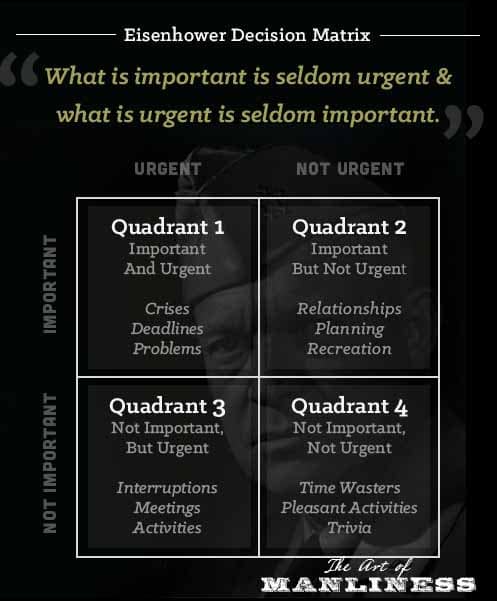
2 Minute Action:
Create a quick to-do list (spend 1 minute on this).Spend the next minute assigning a number to each task.Once you have your numbers you’ve got a prioritized list of things to do.Go get ‘em.