Human Skills
Foundations
What We Covered
Burnout Prevention & Recovery
1.5 Hrs | Virtual | Wednesday, August 5th, 2026
-
💬 Unofficial Start
Music on, five minutes before the hour. First question in the chat: what’s your Starbucks order? Then: how many of you are running on the 1 p.m. coffee?
Then: how did you hear about this training? And — how many of you feel like burnout isn’t just you or your team, it’s your whole field?
Then the honesty check. How many of you feel like we’re going to totally solve all of our burnout problems in the next 90 minutes? Nobody raised a hand. That’s a healthy managed expectation.
Nothing we do in 90 minutes matters unless it’s connected to your goals and what’s relevant to you. So the purpose was to uncomplicate what burnout is and where it comes from, and get clear on what’s inside and outside your control — so you have a little more energy for the things that matter.
Behind the curtain We open five minutes early on purpose, with a question anyone can answer without thinking. People start talking before the session officially starts, which means we don’t spend the first ten minutes waiting in silence for stragglers. -
🤝 Connection Before Content
Find something physical on your desk or in your space that represents your energy in 2026. Hold it up.
There’s a weird thing that happens in virtual training: we stick to our little Zoom prison and stop interacting with the real world, which makes it harder to interact with other human beings. A physical object gets around that.
Then breakouts of four or five, seven minutes: introduce your object and say what it brings up about your energy and motivation going into the rest of this year. Back in the main room, an emoji in the chat for the conversation you just had.

The prompt, as it was on screen. -
↔️ Walk The Line
Mics off. No talking. Each statement is a declarative, not a question. You answer by moving inside your own Zoom square.
- Agree → move to your right
- Disagree → move to your left
- Not sure, need more context, or don’t want to answer → stay in the neutral zone in the middle
Some statements are deliberately ambiguous. Sometimes we don’t have all the answers, and sometimes we have to make a decision anyway.

📝 The 22 statements, in order
- Burnout is just part of my job.
- Whether I burn out isn’t fully up to me.
- I do everything I can to recover and bounce back.
- I know I can help everyone I work with.
- Being emotional is unprofessional.
- I have control over my emotions.
- I totally don’t get road rage on I-76.
- My work is hard to disconnect from at home.
- I decide what I carry home from work.
- Compassion only leads to good things.
- Sometimes I think it would be easier not to care.
- Speaking my mind always gets the results I want.
- I say what I need to say.
- I can control what I say.
- I can control what others think about me.
- When someone doesn’t take my advice, I take it personally.
- I’m the expert in my job, so I don’t need to hear others’ ideas.
- I’m an enlightened bodhisattva, so these questions are trivial.
- Caring about others is good.
- Empathy is a sign of weakness.
- I know how to take the time I need to recover.
- I can’t relax when I’m on vacation.
-
🧭 The 4F Debrief
Three minutes, cameras off, mics off. Run what you just answered through four passes.

- Facts. What happened out there. Chris gave statements. I had to decide where I stood.
- Feelings. What happened in here. This one irritated me. That one brought up a memory.
- Findings. What insights does that give you, and how do they connect to your work or your goals?
- Future. Now what? This one should come out as an action item.
Steal it. It scales: three minutes like we did, or twenty to thirty for something consequential in your organization.
Story🏖️ The vacation vacuum
When we take a break we create a vacuum of space around our heads. No laptop. No work. Chained to a beach chair. What rushes in to fill that vacuum is the entire worry list — and we’ve simultaneously taken away the one tool that relieves worry, which is taking action.
You end up sitting with the problem and not allowed to do anything about it. That’s why vacations so often fail as recovery for people who carry a lot of responsibility.
Pro Tip🦆 The rubber ducky
Software developers found that explaining a problem to another developer often solves it — but interrupting a developer is expensive. So they put a rubber duck on the desk and explain the problem out loud to the duck. Putting it into language activates the language centers and dislodges the solution.
Journaling works the same way. One caveat: your brain gets better at whatever it practices. If the journal is complaining, you’re just getting better at complaining.
-
🧠 Burnout Prevention — What’s In Our Control

⚓ The three anchors
- Compassionate Detachment. Empathy says I feel your pain. Empathic distress says I feel it so much, without recovery in between, that I’m burning out — that’s what the research actually studies, and it isn’t the same as the casual phrase “compassion fatigue.” Compassion says I see your suffering and I’m motivated to help resolve it. In a brain scanner, compassion shows up on the reward circuit. It’s a net positive energy source. Compassionate detachment is caring deeply about someone’s problem without internalizing it as your own. (Not my phrase — the lineage is in The Research below.)
- Durability over Resilience. Resilience asks how fast you can bounce back. Useful — but you can’t bounce back forever. Durability asks a different question: am I practicing the skills that are essential for surviving my job? Find the root of the anxiety — difficult conversations, difficult personalities, managing expectations — and train that specific skill. It’s preventative, it’s harder, and it makes resilience more effective when you do need it.
- Active Recovery. Small, low-energy, generative activity that gives your brain something to focus on that isn’t work. Costs a little. Usually returns more. Full map in the next section.
Story⛑️ The lifeguard
A lifeguard doesn’t jump in after a drowning swimmer. A panicking person can’t hear instructions, and jumping in puts two people at risk.
The lifeguard stays on solid ground and throws the preserver — giving the swimmer enough safety and control to calm down and listen, then reels them in. Stay on the deck. Throw the preserver.
Story🩺 Physical therapy
The gym has a visible progression: pick up heavier things, put them down. Physical therapy gives you eighteen annoying small exercises where you can’t see progress at all — fixing the tiny problem now so it doesn’t become eight bigger ones in twenty years.
Psychological skill training works like physical therapy, not like the gym.
-
🗺️ The Recovery Map
Language borrowed from the ultra-endurance community — people who run a hundred miles in the desert and have to have a recovery process that actually works.
Two axes:
- Vertical — energy. How much does this activity cost me?
- Horizontal — effect. Is it draining, or is it restorative?
That gives you four quadrants. Only one of them is the target.

↑ Costs more energy
Costs energy · Draining❌ Net Spend
Mostly work. You signed up for it, you like it, and it still costs you. Introverts are the classic case: I want to be around people, I enjoy it, and I still have to hide in the hotel room eventually.
Costs energy · Restorative✅ Active Recovery
A walk. The 5,000-piece puzzle on the dining room table. Knitting. Reading. Calling your best friend. Fifteen minutes on the guitar. It’s not passive — you have to contribute something — and that’s exactly what gives your brain permission to stop working on the other thing.
← Draining
Restorative →
Low energy · Draining❌ False Recovery
The slippery one. Five minutes between things, pull out the phone, scroll. It feels like a break. The evidence that it restores you is mixed at best — one finding is that social media use right after a stressful event slows your cortisol recovery instead of speeding it. And the feed is optimized for engagement, not for your rest. Somewhere in the early 2010s marketers figured out that rage sells. That’s not the rollercoaster you want to ride before going back to work.
Low energy · Restorative❌ Intuitive Recovery
Your body telling you what it needs — sleep, a nap, lying down. Real recovery, and you already know it works. It’s just not the quadrant we’re training today, because you don’t need to be taught it.
↓ Costs less energy
The ultra-endurance version: after a hundred miles your body needs the nap. But in the week after, sitting on the couch does nothing for the metabolic waste in your bloodstream and doesn’t get oxygen back to the muscles. A light walk, an easy spin, a gentle swim moves recovery faster. Same idea for your psychology.
Pro Tip🎸 It’s personal, and it isn’t consistent
Chris’s version: stuck in a creative slump, pick up the guitar, set a timer for fifteen minutes, make something. About 80% of the time it returns more energy than it cost. The other 20% he doesn’t have the spend — and that’s fine too. Your zone won’t work for every stressor, or every time.
✏️ Draw your map
Three minutes, cameras off, fill in all four quadrants. Speed over accuracy. Educators want to get the right answer and think too hard before writing a bullet down — don’t. Generate now, organize later.

Blank version. Print it, or redraw it on the back of anything. -
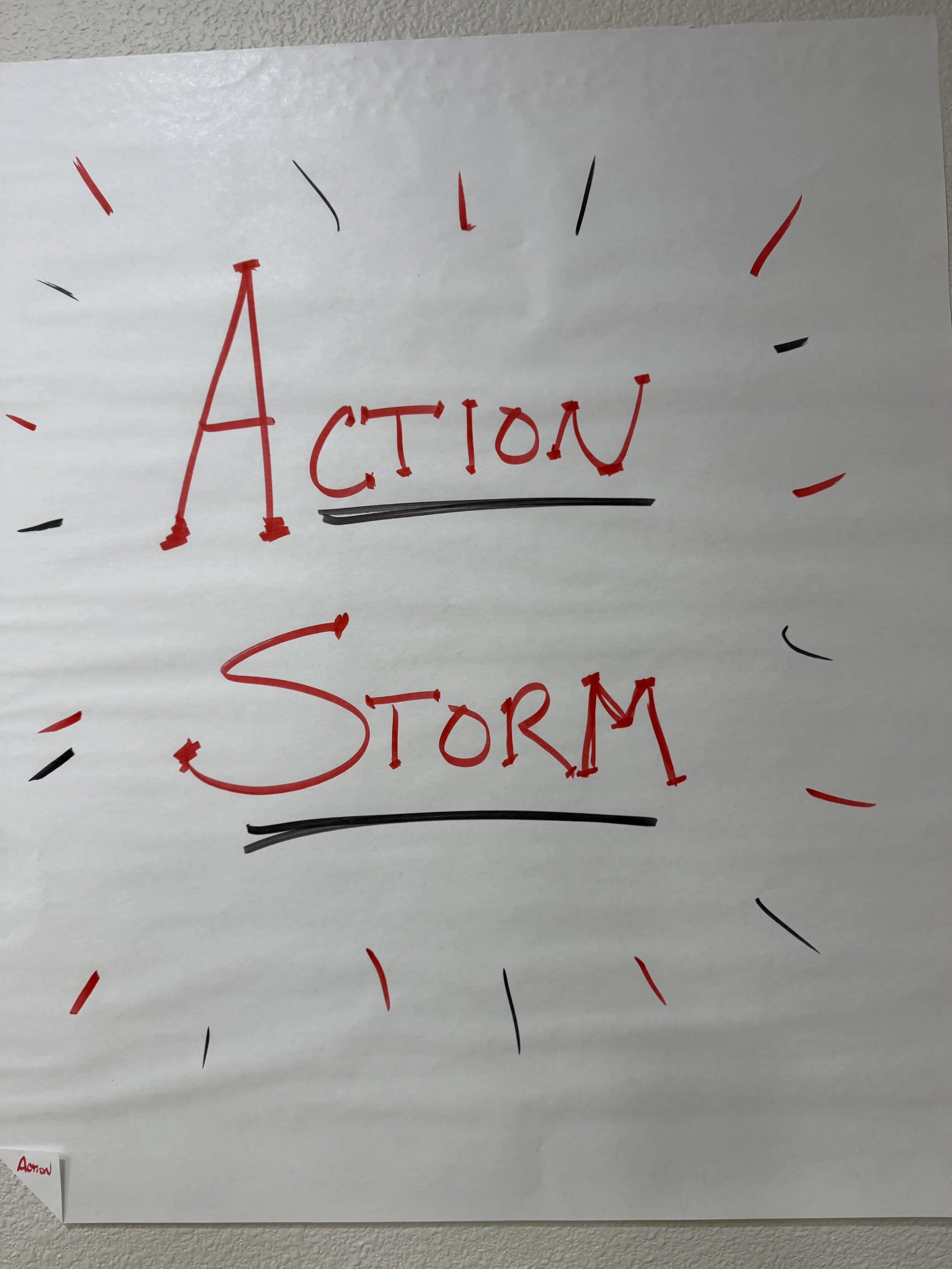
🎯 Action Storm
Seven minutes back in breakouts. Two things and only two things:
- Share what you put in your Active Recovery zone.
- Help everyone else in your group come up with actions for theirs.
There’s a reason to do this with other people. You can watch a reality show and instantly see what someone should have done differently — from the outside it’s easy. From the inside, you’ve been doing a thing so long you can’t see the alternative. Other brains on your problem find the option that was just outside your bubble the whole time.
-
✨ Closing
In the chat box, finish this sentence — but don’t hit enter:
“When ___ happens, I will ___.”
Tie one active recovery item to a specific trigger. On three, everyone sends at once.
Behind the curtain Everyone types first and nobody sends until three-two-one. Typing first means you write your own commitment instead of borrowing the first one you read. Sending together means you watch twenty other people commit at the same moment.
Resources and Links 📚 Where to go next
No raffle this session. These two came from the April day and map straight onto what we covered.
Why Zebras Don’t Get Ulcers
Why your body doesn’t know the difference between a real predator and a 4 PM email. The book behind the lemon demo.
The Research 🔬 Empathic distress, compassion fatigue, and where the terms come from
Several of you asked for the studies. Here they are, with what each one actually says.
Empathic Distress Fatigue Rather Than Compassion Fatigue?
The full argument for the distinction we drew: what burns caregivers out isn’t compassion, it’s empathic distress. Compassion isn’t a tank that empties.
Empathy and Compassion
The short version, four pages. An empathic response to someone’s suffering splits two ways: empathic distress, which is aversive and leads to withdrawal, or compassion, which is warm and leads to approach and helping.
Differential brain plasticity after compassion and empathy training
Where the reward-circuit claim comes from. Empathy training recruited the negative-affect network; compassion training on top of it recruited the reward and affiliation network instead.
📚 Where “compassion fatigue” came from
Carla Joinson introduced it in 1992 to describe nurses losing “the ability to nurture.” Charles Figley developed it into the “cost of caring” framing that spread everywhere. The pushback since: compassion isn’t what’s being depleted, so the name points at the wrong target — and at the wrong fix.
🔍 Where “compassionate detachment” came from
Not from me, and not from any one person. It circulates in nursing, hospice, social work, and recovery writing without a citable origin.
The scholarly ancestor is detached concern — Renée Fox named it in Experiment Perilous (1959), and it was formalized as a medical-training aim by Lief and Fox in 1963. It got criticized for producing coldness instead of care, which is exactly why the compassionate half matters.
The best-evidenced modern version of the idea is Singer and Klimecki’s compassion-vs-empathic-distress distinction, above.
Other Free Resources
Dynamics Of Connected Teams
6 Hrs | In-Person | Saturday, April 25th, 2026
-
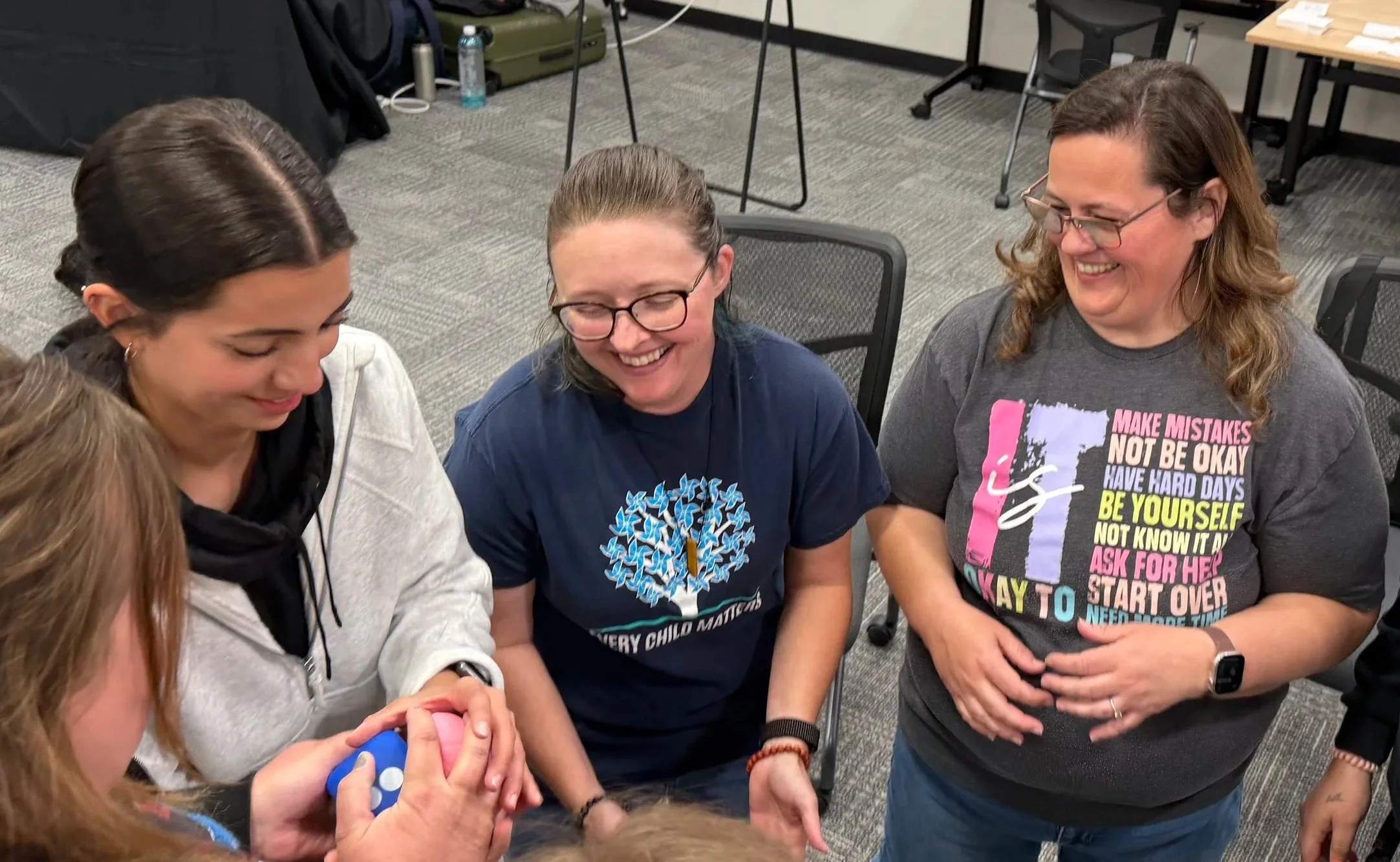
🃏 Unofficial Start
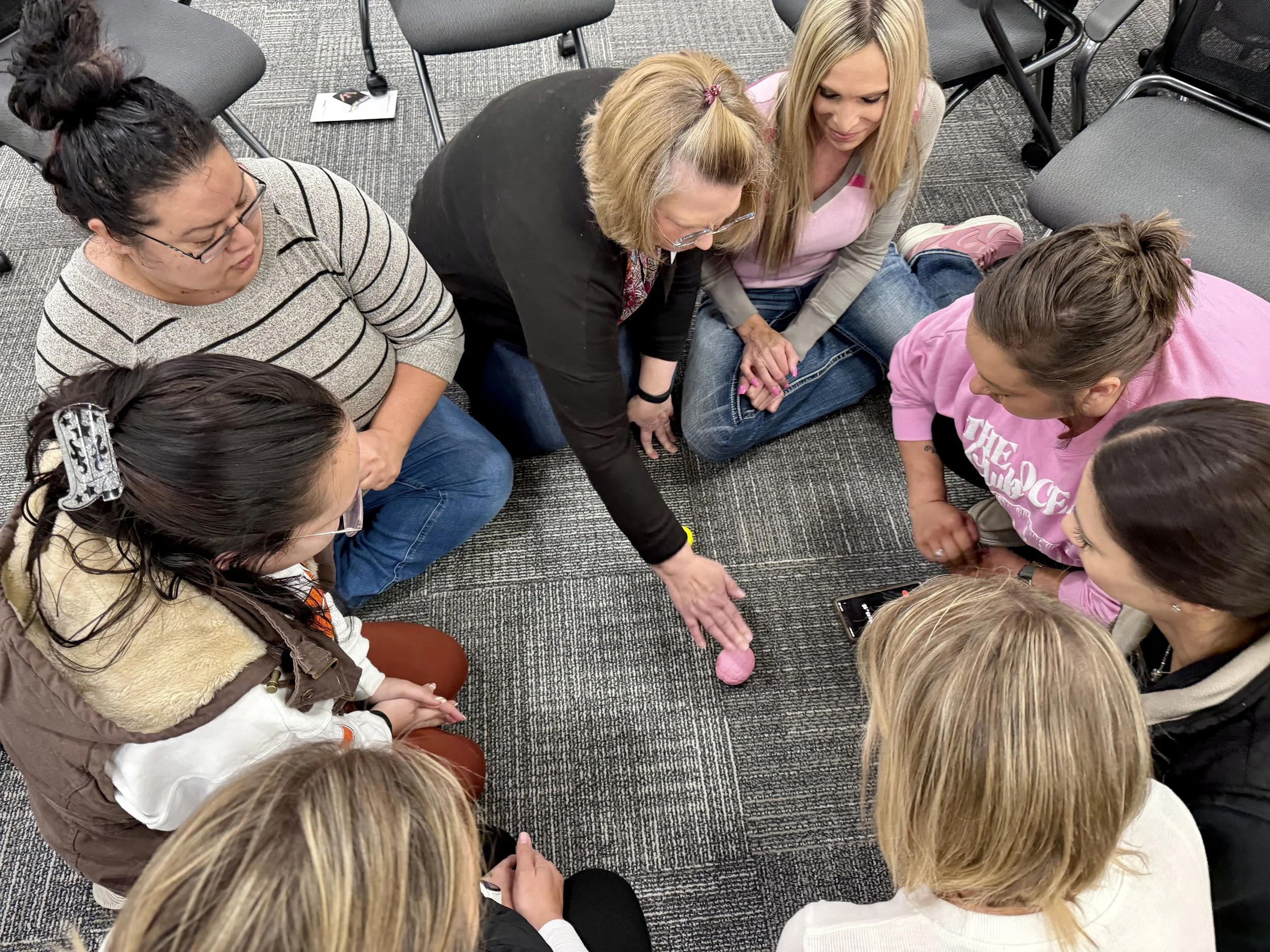
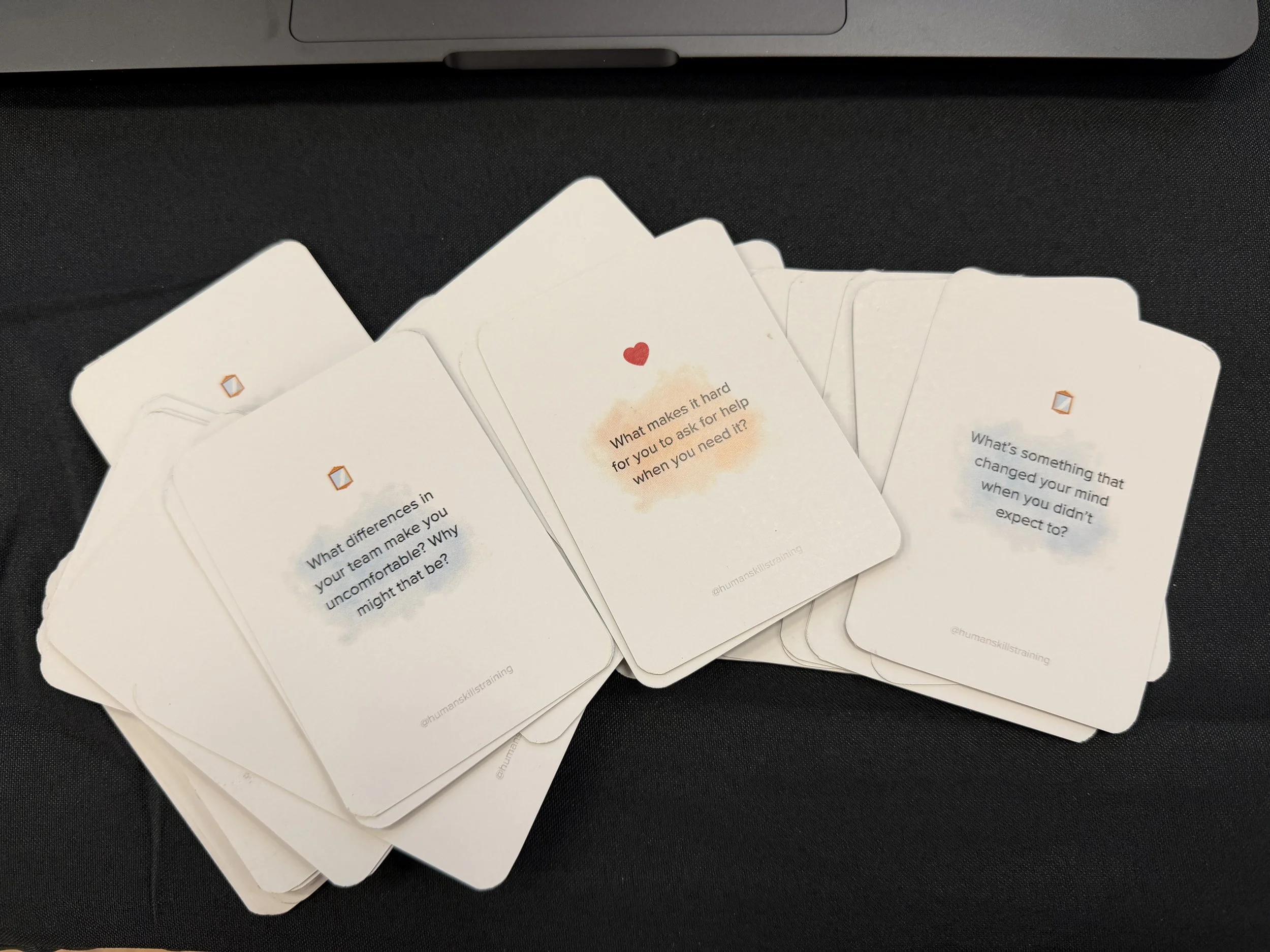
Music on. A deck of cards spread face-down across a center table. Name tags at the door.
Each card carried one question: What story does this bring up about collaboration at work?
Behind the curtain Time is the only resource we don’t get back. Most workshops waste the first ten minutes waiting for stragglers. The cards turn that waiting into the first piece of work we did together — a deliberate use of the time we had. -
🤝 Connection Before Content
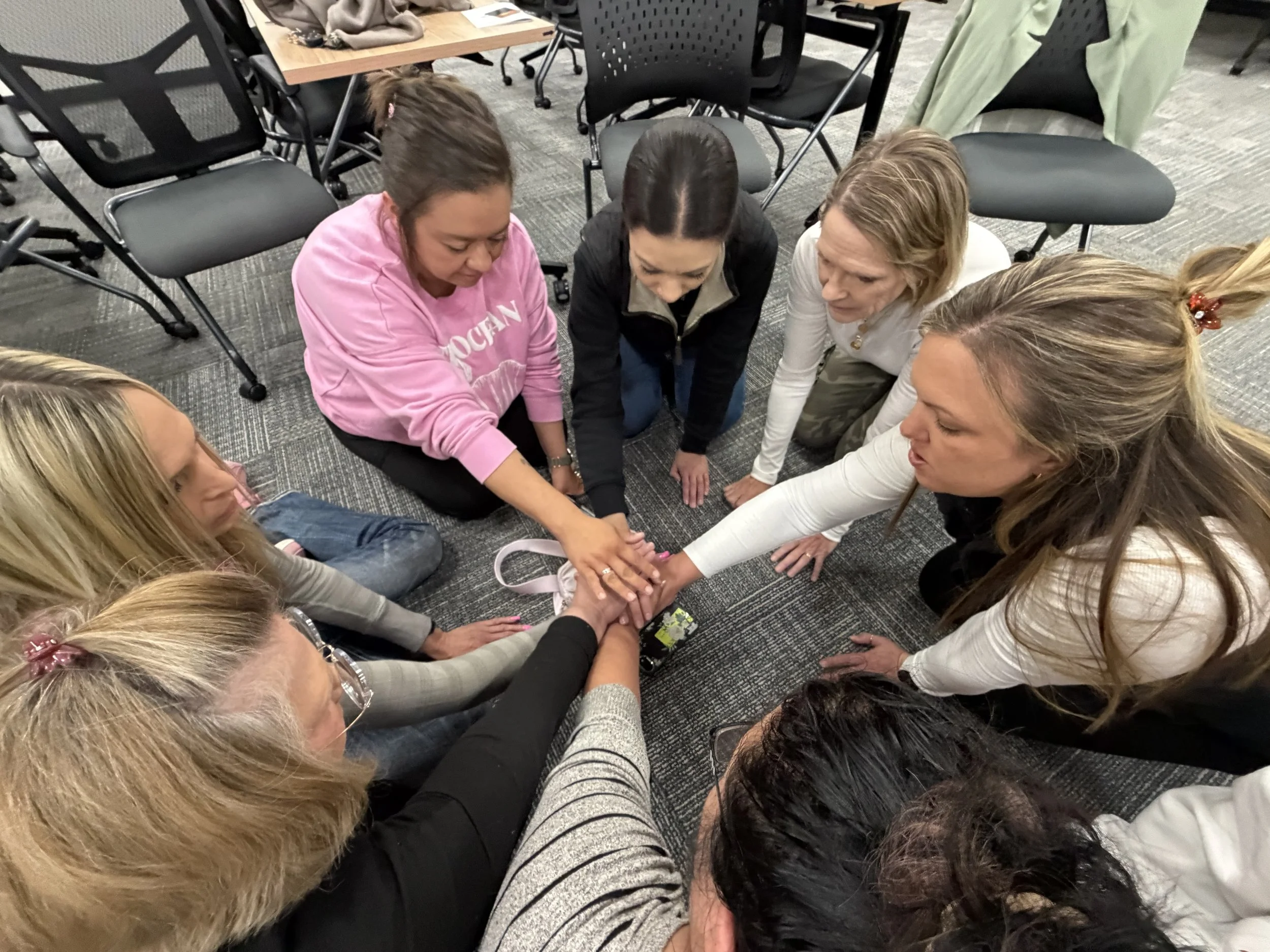
Trios. Share your cards. Find a common denominator that has to do with collaboration.
You found the thread without anyone telling you what it was. That’s a Human Skill in action.
-
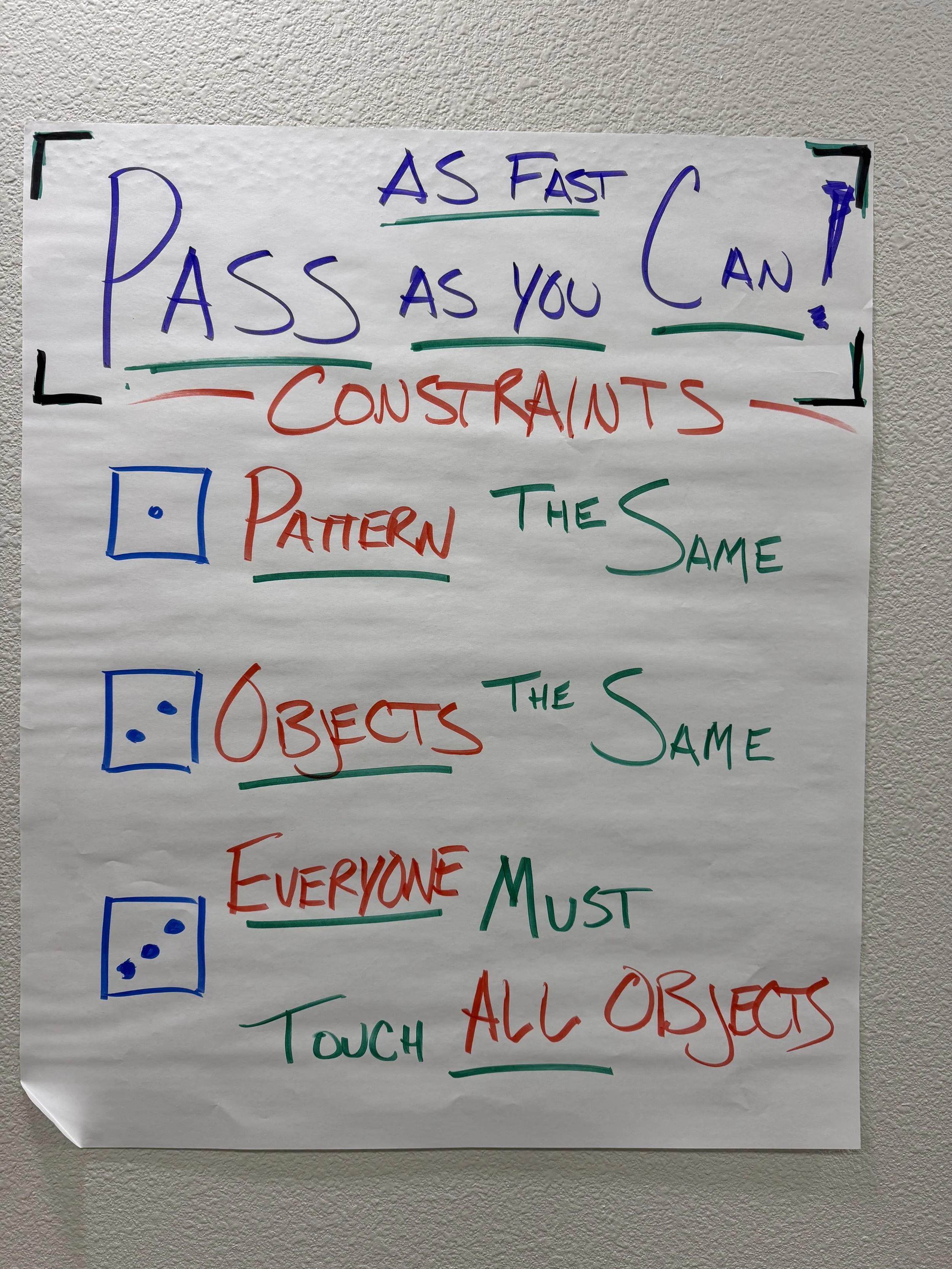
⚡ Pass It As Fast As You Can!
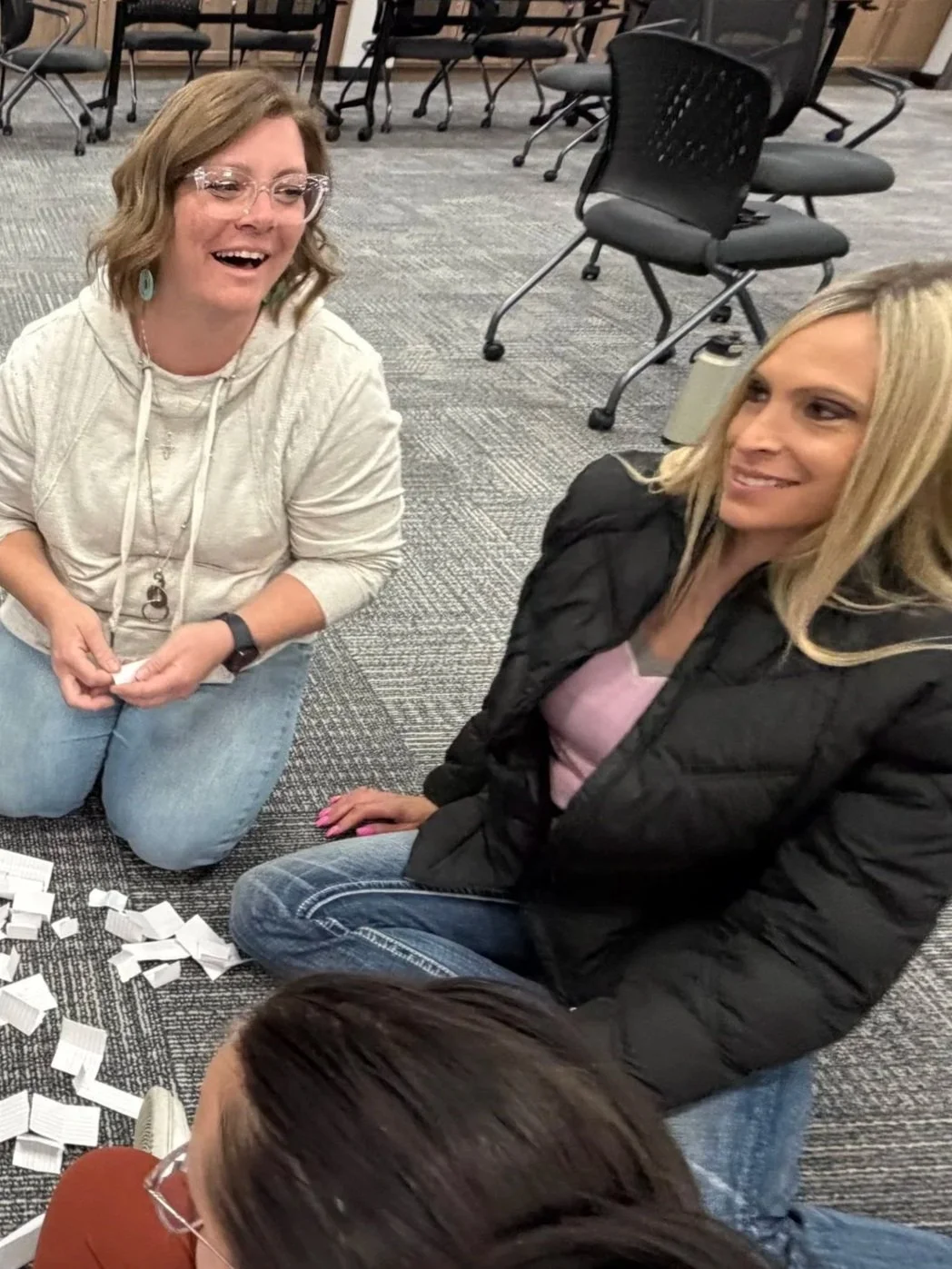
Our first team challenge. Thirty minutes of passing, iterating, and trying again.
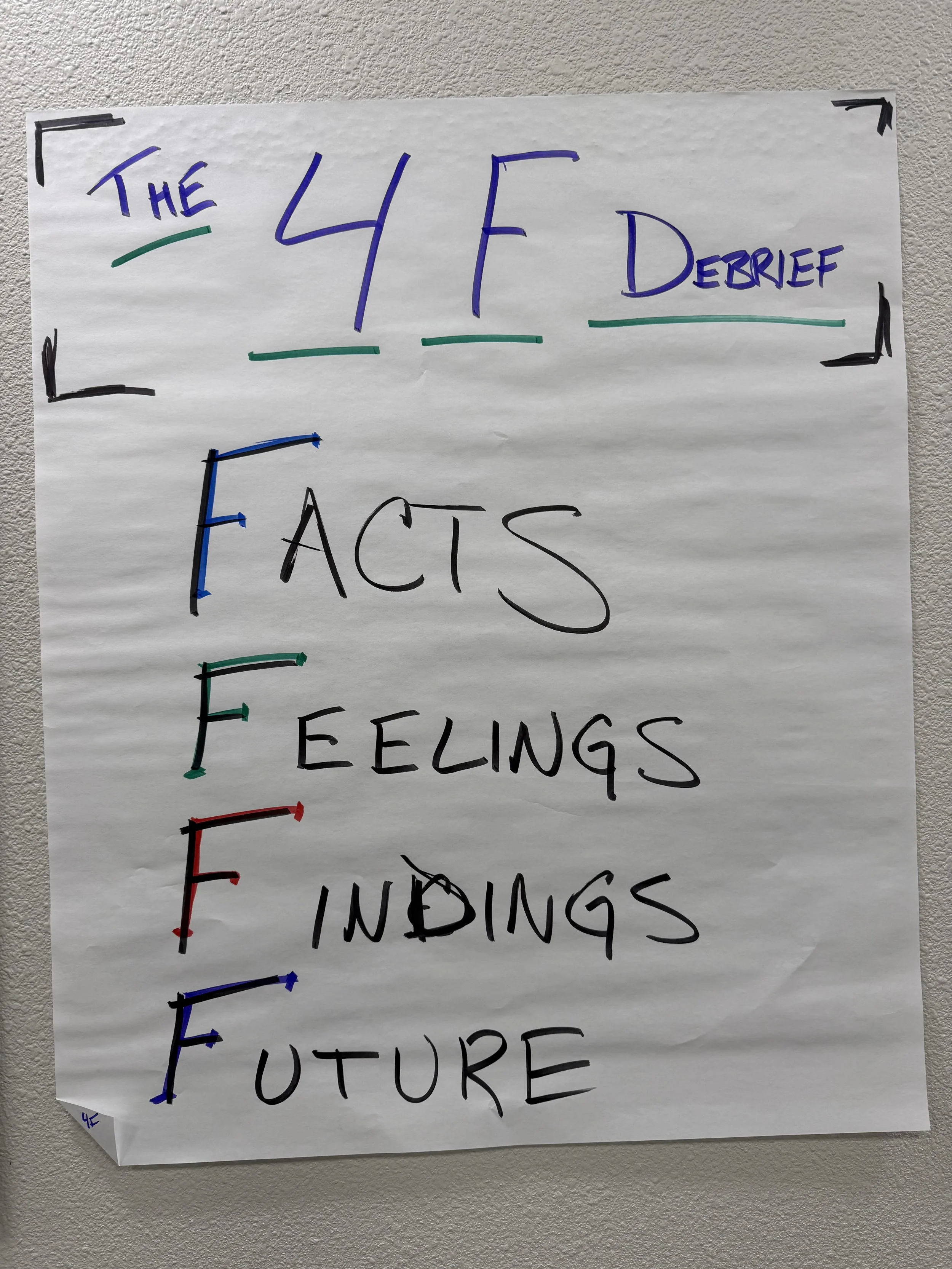
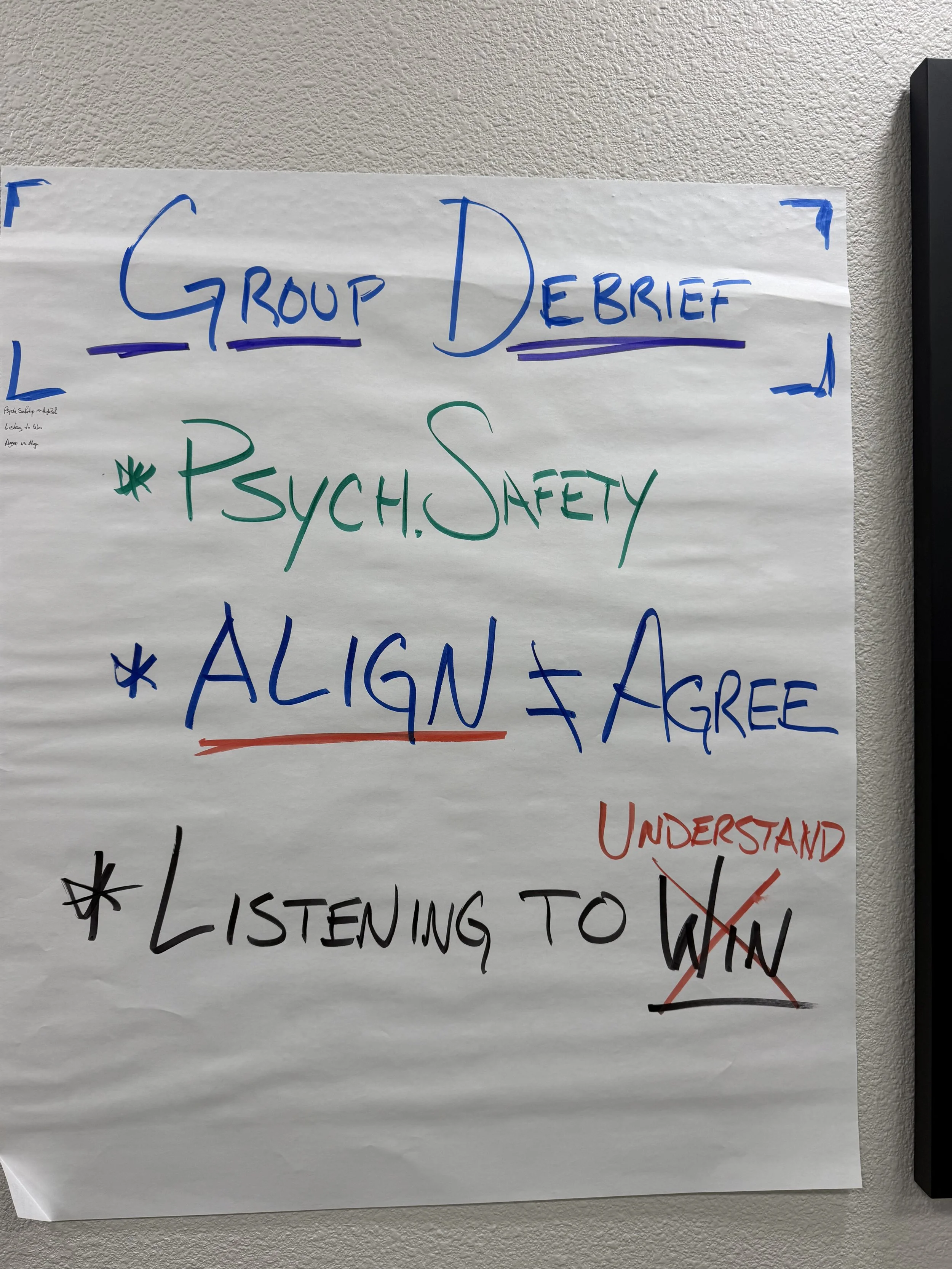
Then the 4F Debrief: Facts · Feelings · Findings · Future. Five minutes alone, then twenty-five together — the room named what was actually happening.
⚓ Three anchors we named afterward
- Psych Safety = High Performance. The team that can say "I don’t know" out loud is the team that gets faster.
- Listen to Understand. Not to wait for your turn. Not to fix. Just to understand what’s actually being said.
- Agreement vs. Alignment. Getting everyone to agree is nearly impossible. Aligning on a shared goal gives your team the buy-in to execute, test, and figure out what’s next together. Without it, you may experience: infighting, sabotage, and quiet exit.
-
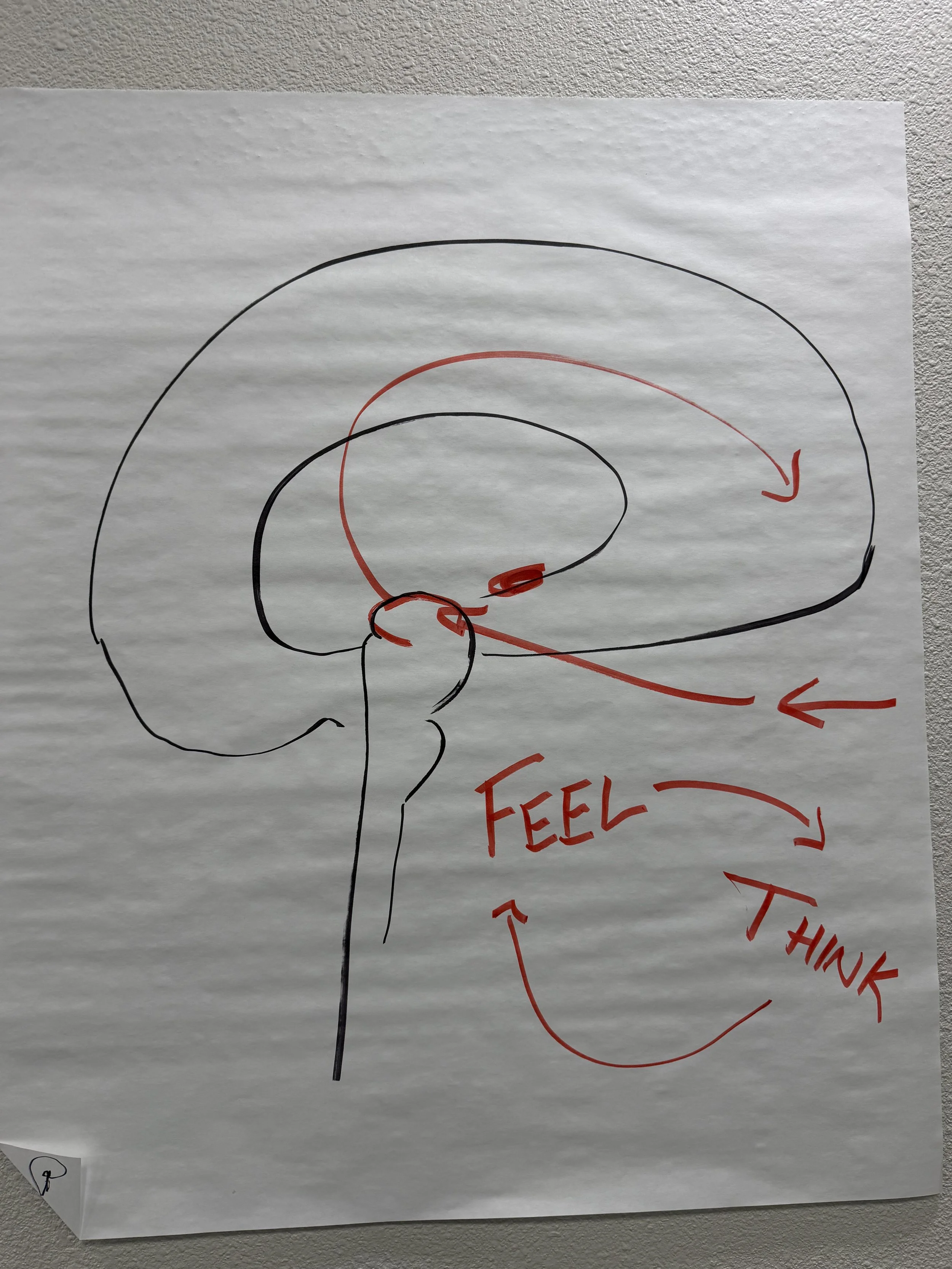
🧠 The Neuroscience Lab at Penn State
We feel, and then we think. Always in that order. The proof? Your biological response to a 🍋 lemon that wasn’t there.
-
☕ Break
Coffee. Bathrooms. Music up.
-
🎁 Raffle
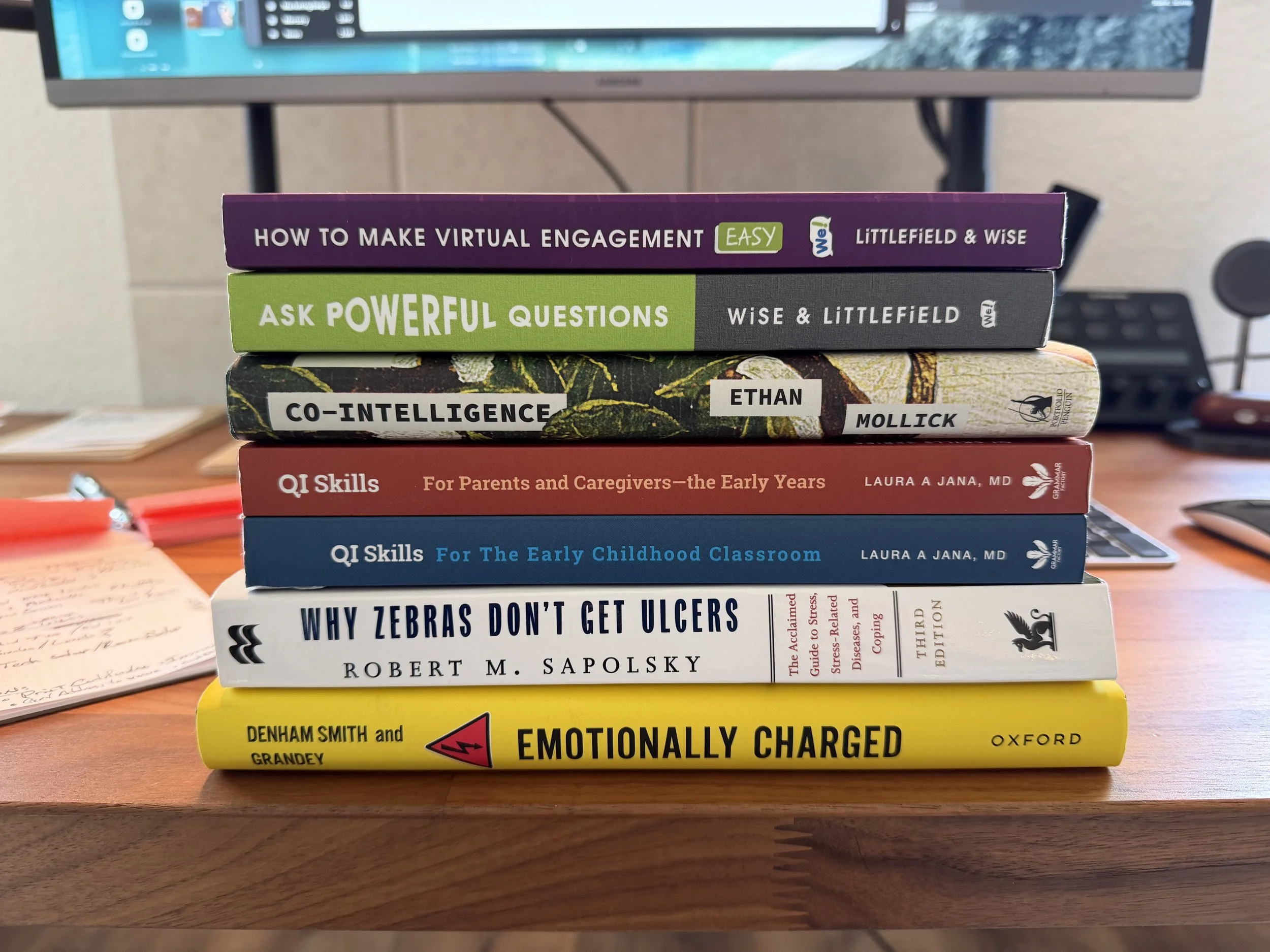
Seven books found new homes. Each one is something I’ve gone back to more than once.
Full list with author links: Resources and Links below.
-
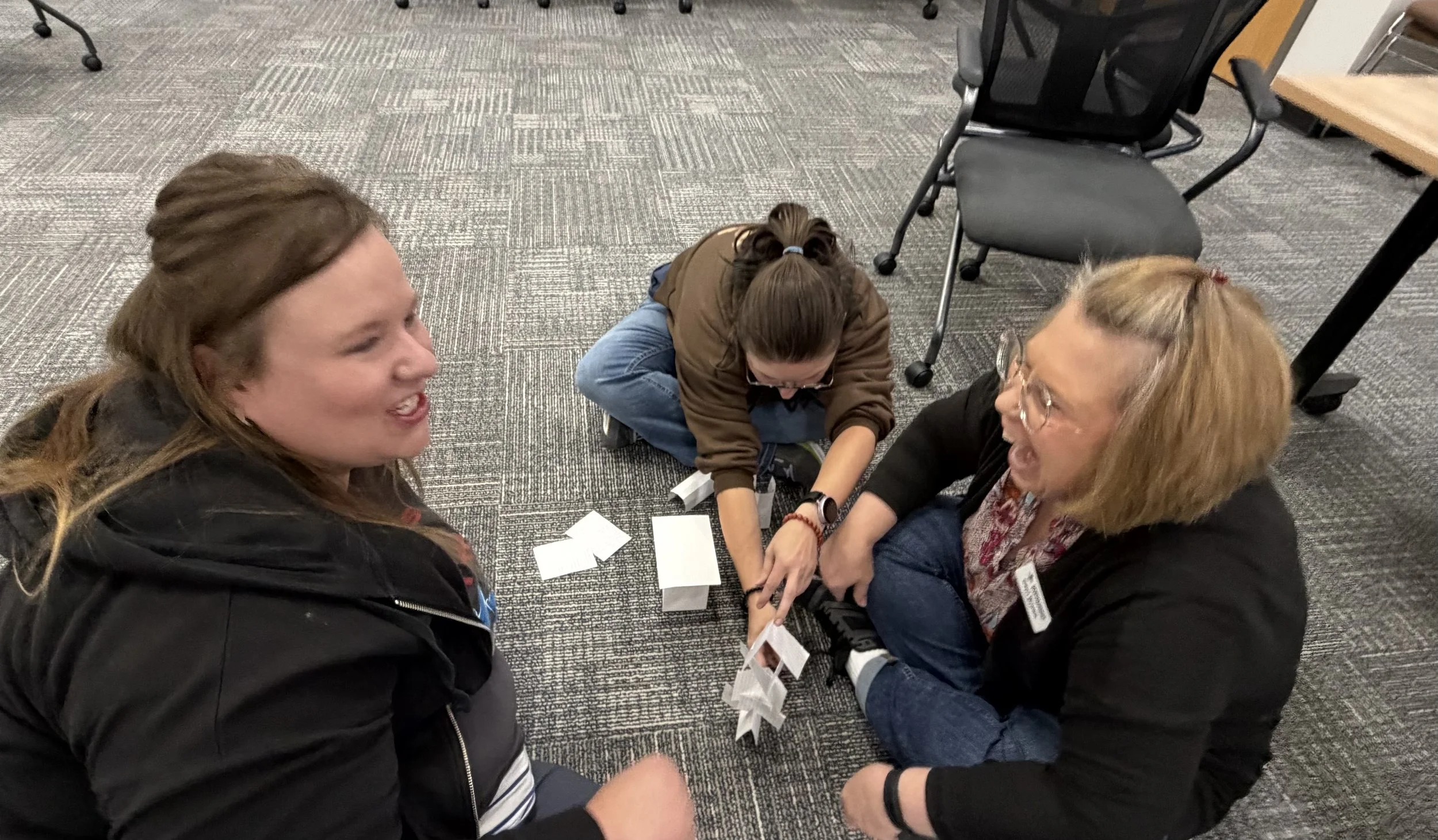
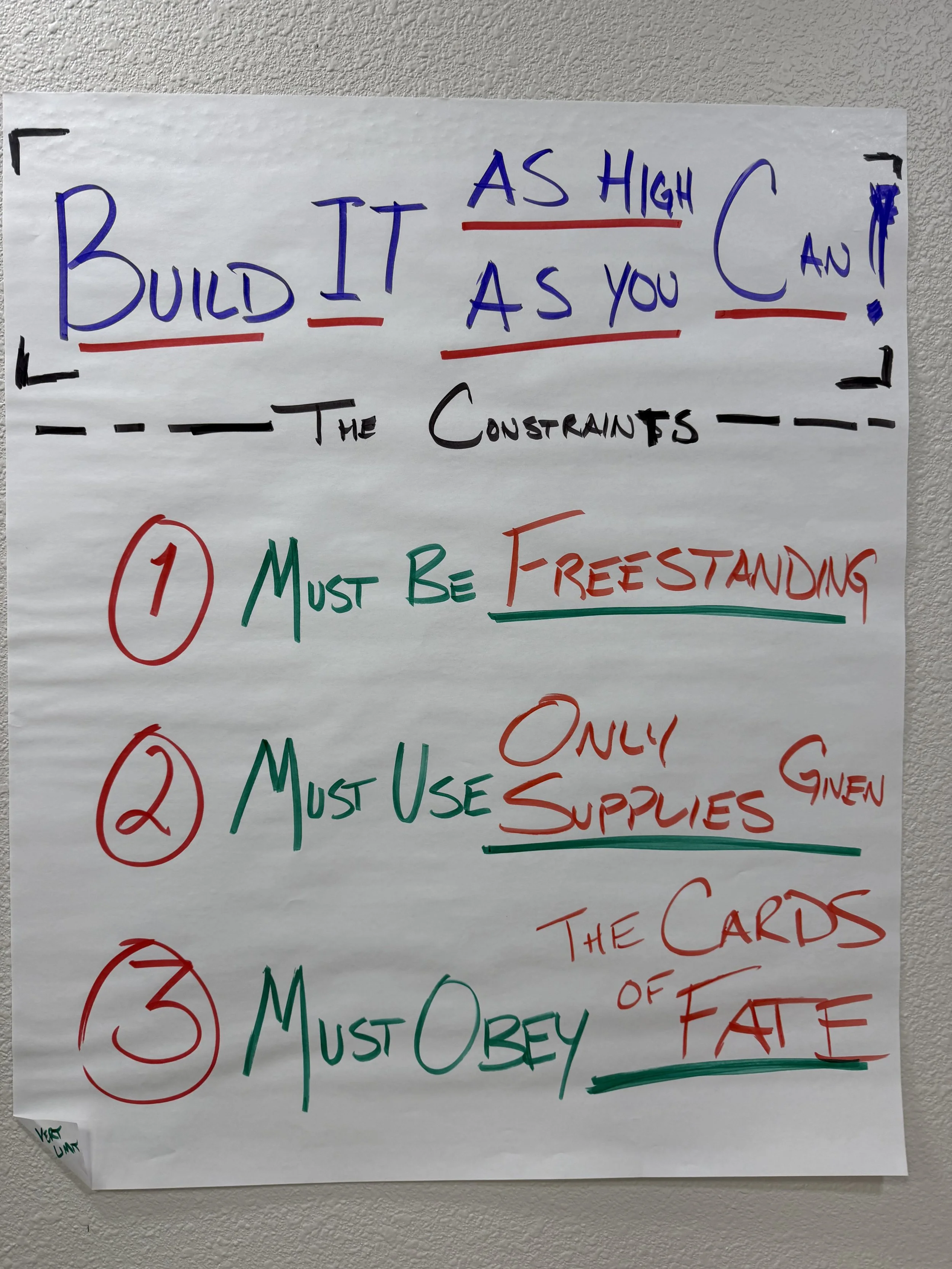
🏗️ Build It As High As You Can
Our second team challenge. Build the highest free-standing tower you can — first round open, second round under constraint.
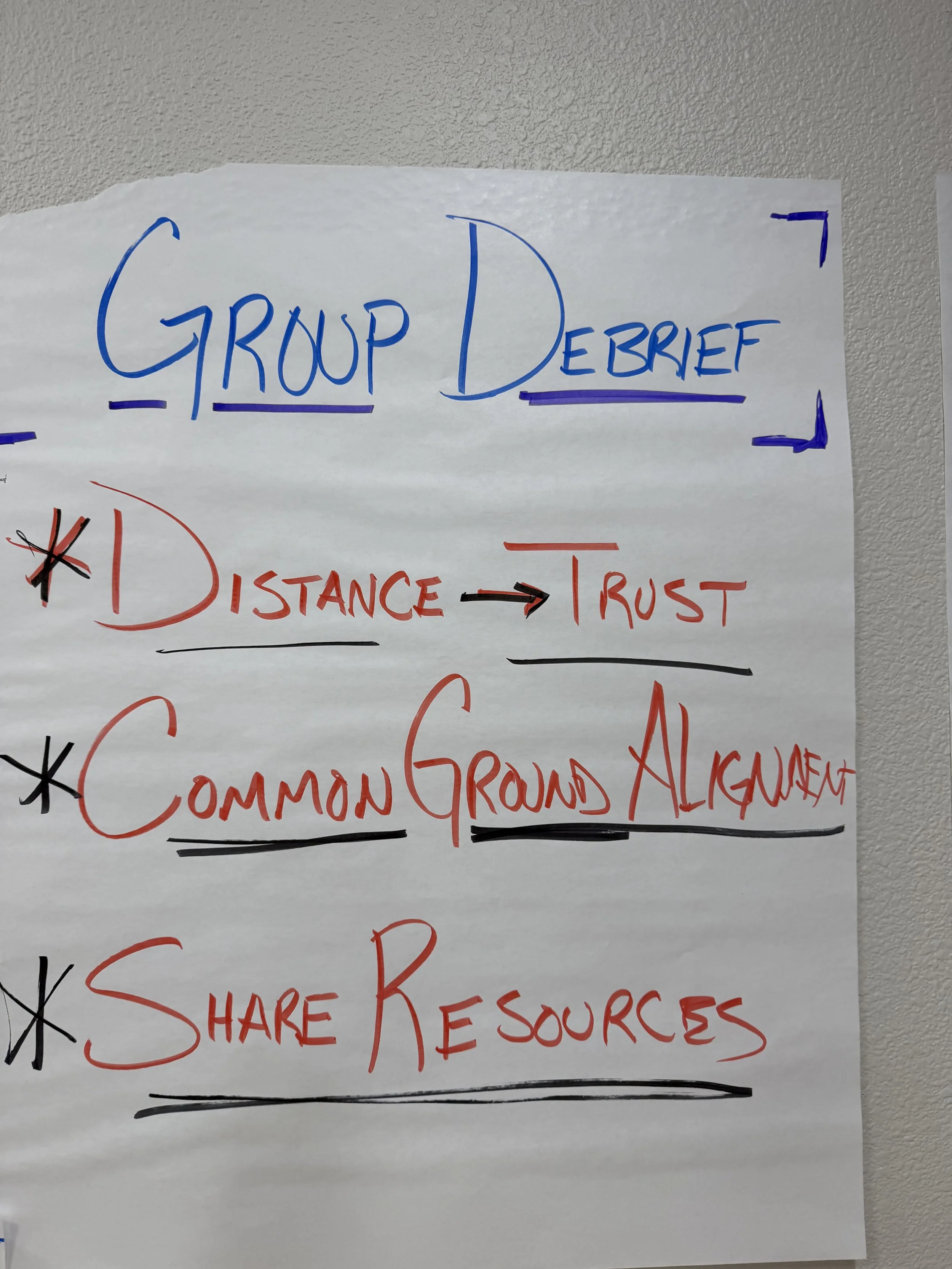
Then the 4F Debrief through the constraint lens. Five minutes alone, twenty-five together.
⚓ Three anchors we named afterward
- Distance = Trust. Distance creates habitual gaps in team trust. Bring your people together.
- Common Ground Alignment. Find what you both already see the same way. Build out from there.
- Share Resources. The team with shared resources outperforms the team with hoarded ones, even when the hoarders have more.
📖 Stories that came up in the debrief
Story👟 The Air Jordan launch — constraints vs. rules
Nike’s 1985 shoe violated the NBA’s uniform rule. They paid the fines. Constraints are immutable; rules were written by someone — and can be unwritten.
Story🔍 Detective, not the Judge
The Judge already decided the verdict and is looking for evidence. The Detective is looking for what’s actually true. Pick on purpose.
-
🎯 Action Storm + Accountabilibuddy
Three minutes alone: What’s something that impacted the way you approach collaboration? What small, specific thing will you do on Monday?
Then trio cross-pollinate — share your action and the problem it’s supposed to solve. Help each other generate three new, smaller actions.
Then Accountabilibuddy: pair up outside your trio. "When I leave I will ___. You can help me by ___." Phone numbers exchanged. Friday check-in set.
-
✨ Closing
"You were spectacular today because ___."
That’s the exit mechanic. Instead of clapping, find someone you hadn’t talked to yet and finish the sentence.
Behind the curtain Applause points the attention back at the front of the room. This sends you out specific, named, and seen by someone else — which is where the focus belongs at the end of a day like this.
Resources and Links 📚 The seven books from the Raffle
How to Make Virtual Engagement Easy
The playbook for keeping a virtual room awake and connected.
Why Zebras Don’t Get Ulcers
Why your body doesn’t know the difference between a real predator and a 4 PM email. The book behind the lemon demo.
QI Skills for Parents and Caregivers — the Early Years
The early-years half of the QI Skills framework.
QI Skills for the Early Childhood Classroom
The classroom half — the closest direct fit to what you do every day.
Other Free Resources
🎧 That playlist tho . . .
What’s Next?
Budgets are changing.
In-person PD days are rare.
Here are other ways I may be able to support your team:
Custom Connection Card Decks for coaching and training
Virtual PD for Emotional Intelligence, Facilitation Skills, Difficult Conversations
Train The Trainer for training design, PD design, or DIY challenges
Culture As A Service: A comprehensive culture evaluation and maintenance for your entire team
How To Use AI for good.